By Mary Kunasch, Argus Correspondent
If you were born in the 20’s, 30’s, or 40’s and lived in Rural Wisconsin, chances are you went to a one-room school. One-room schools were popular back in the day because they could open them in rural areas to make it possible and convenient for students to receive an education, regardless of where they lived.
Schools would have just one teacher for all eight grades. There was no bus transportation, so you either got to school with your parents, a neighbor, or you walked. One-room schools were common yet so unique, as there were as few as 1 to 3 students in a class, and the teacher would teach all grades.
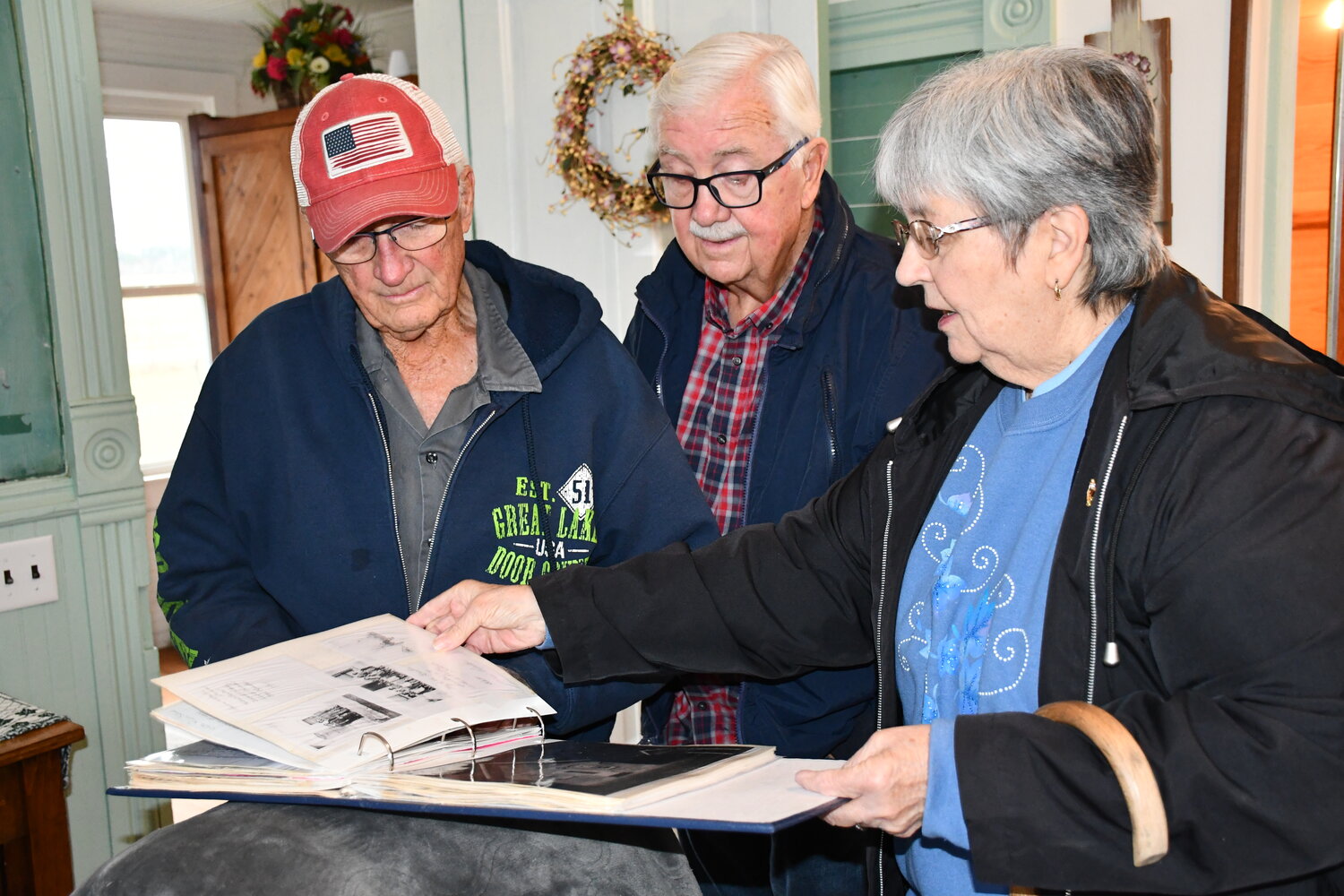
Larry Spees, now 81 years old, is a fourth-generation student attending Spees School. The school built in 1896, was named after his ancestors, who built on their personal land. He said a first grader could be learning eighth grade, and eighth graders could be remembering what they learned in first grade. Larry fondly remembers all three of their teachers through his years, including Florence Waid, Mrs. Fredericks, and Wilma Pomplun.
Chores were given at Spees school, where the older students would be in charge of bringing in wood from the woodshed and water from the hand pump outside. He said school was in session starting after Labor Day from 8 a.m. to 3 p.m., with a week off in the fall to harvest potatoes. He added there were lots of snow days, as back in the day, they used road graders to clear the roads. Also, seeing there was no running water, the school had an outhouse.
The younger students like Susan (Wedde) Gabryshak, now 78 years old, had chores that included clapping erasers, hanging the flag, or ringing the bell. Two generations of Wedde’s went to Spees School, and Susan fondly remembers their field trips, which took them on a walk around nearby Marl Lake or a stroll in the woods where they would identify trees by the shape of their leaves. They had a makeshift baseball diamond and a merry-go-round. She said they would also play Annie Annie Over the woodshed, and Larry remembers shooting marbles.
Lunch was a cold lunch brought by each student, except for Larry, who always had a hot lunch as he went to his home across the road, ate a quick lunch, and returned. Larry remembers one of the students walking three miles to and from school and eating lard sandwiches every day.
“When I was a kid, I thought the school was so big, and now when I visit, I find it so small,” said Susan. I got to sit by the wood stove in the winter and found it mighty comfy. Christmas programs were always so fun, as we had to be in everything. She said, “One year I was playing an aunt, and the uncle was five years older, and he had to kiss me, and I was so embarrassed.”
All the memories came flooding back last November when Susan contacted Larry and wanted to dig up the time capsule buried in 1953, off the back corner of the school. Burying a time capsule in 1953 in the country in a one-room school was so different from what it is today. It was not put in a manufactured metal container; it was put in a small jar sealed with canning wax, in another glass jar a bit larger, again sealed in wax, and finally in a quart jar, with a tight lid, sealed in wax. What was in the jar – neither Larry nor Susan could remember, but they sure knew where it was buried. Last November, a group gathered at the Spees School, now converted into a unique and quaint living space where the nostalgia and much of the school remains intact, to dig up the time capsule.
Shovels, metal detectors, picks, and stakes were used to dig and find the treasure. The first day, the hunt was called off because they had gone down about four feet and gone out several feet from the building, thinking that was where it was buried. After several hours, when the hunt was called off, Larry and Susan left somewhat deflated. Larry could not sleep that night and returned early in the morning to do more digging. It wasn’t long, and Larry hit an object in the ground that sounded like sand over glass – sure enough, he found the time capsule. He did not dig it up completely till Susan arrived, so she could witness the removal of the time capsule buried in 1953. What was in that capsule? No one remembered.
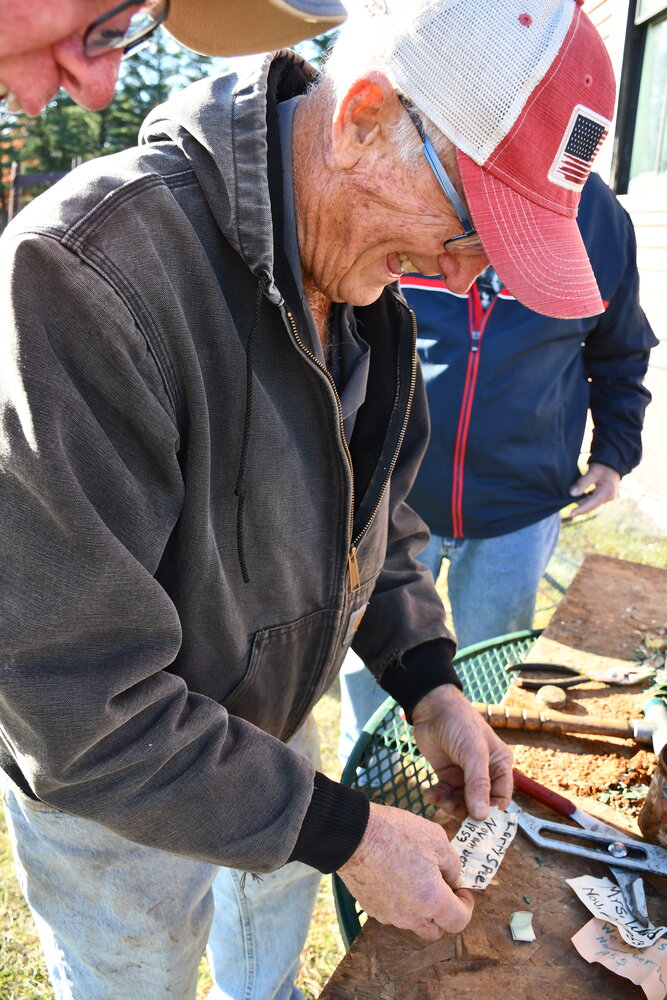
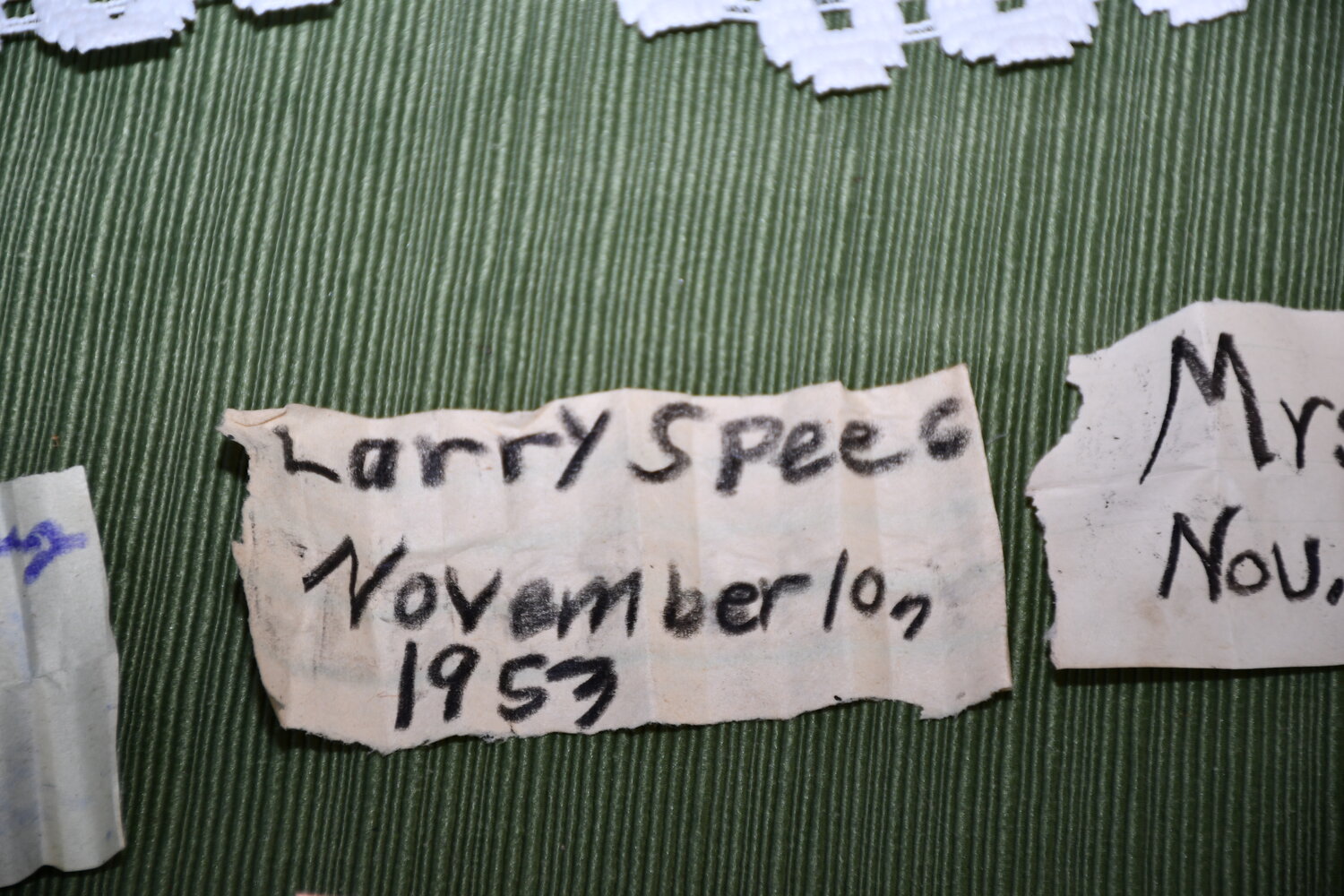
Once the jar was taken out of the sand, Larry held it up like a long-lost treasure. He was so elated, and he flashed the biggest smile, and his eyes lit up. So anxious to get inside and see what it held. He had tools, lots of tools, and put a platform on the old pump and started to open the jar, the first jar he got open without any trouble, the second jar was a bit more challenging, and it wasn’t long before Larry was on the third jar that held the treasures. With anticipation and not knowing the contents, Larry carefully opened the last jar and pulled out the small folded slips of paper, and the first slip he opened was Susan Kaye–that was Susan Kaye Wedde, but she was only in first grade, and therefore, she just wrote her first name. She must have liked her middle name, as she wrote Susan Kaye and the date.
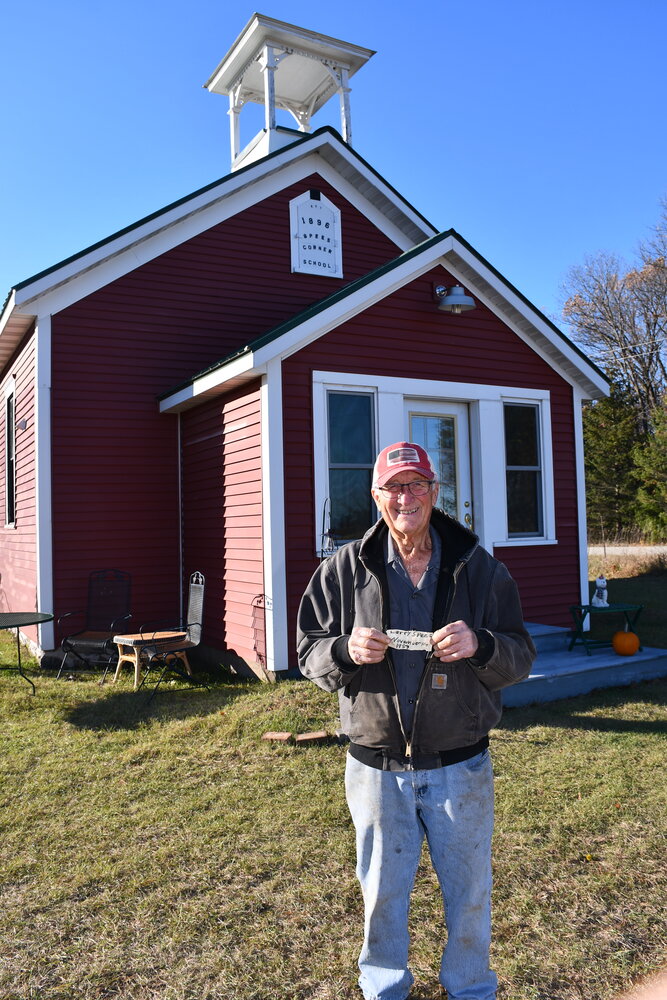
There were 12 pieces of paper with the names of the students and the date, along with their teacher, Mrs. Florence Waid. Those pieces of paper are being framed and will be hung in the school now owned by Larry Riendeau. Riendeau bought the school, changed the color from white to red, and everything on the outside looks the same, except the bell was removed when the school was sold. The school is located on 13th Avenue in Wautoma.
Spees School, Wautoma, opened its doors in 1896 and closed in 1955.
To date, only four classmates from those days remain, including Larry, Susan, Dale Spees, and Sandy Bartel Gosha.



Comments
No comments on this item Please log in to comment by clicking here